
I never paid much attention to how often I pace until someone asked me if I was nervous about something. They had noticed that instead of standing in one place, I kept walking around.
That question made me notice something about myself: I really do not like standing still. If I am waiting somewhere, I naturally begin pacing or shifting from one foot to the other. It is not necessarily because I am anxious or impatient. Walking around simply feels more comfortable than remaining in one spot.
Once I became aware of it, I started wondering why. How could walking—which still puts weight on my feet—feel easier than simply standing? And as someone with congenital flat feet, could my foot structure be part of the reason?
Flat feet do not cause pain for everyone. Many people have low or fallen arches without experiencing any problems at all, something I explored in Why Do Some People Have Flat Feet but Never Feel Pain?. However, when flat feet are symptomatic, prolonged standing can make discomfort and fatigue more noticeable.
So why can standing still feel more difficult than moving around?
What Happens to Flat Feet When You Stand?
The arches of the feet help distribute body weight and adapt to the ground. With flat feet, the inner arch is low or flattens when weight is placed on it, allowing more of the sole to contact the floor.
That is not automatically a problem. But in some people, the foot also rolls inward excessively while bearing weight, which is known as overpronation. This may change how pressure is distributed and make the structures supporting the foot and ankle work harder. Remaining in the same position for a long time can then bring on fatigue or discomfort.
This may feel like aching or burning beneath the feet, soreness around the arch or heel, discomfort along the inside of the ankle, or simply tired and heavy feet. Some people may also notice discomfort higher up the legs or body. The symptoms and their causes will not be the same for everyone.
Flat feet may be part of the picture without being the only explanation. Footwear, hard flooring, tight calves, muscle weakness, plantar fasciitis, bunions, arthritis and other conditions can also affect how comfortable standing feels.
Why Can Standing Still Feel Worse Than Pacing?
Walking also places weight through the feet, so it may seem strange that gentle pacing can feel better than standing still.
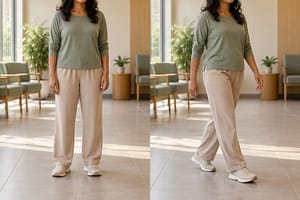
When you remain in one position, the same areas of your feet continue carrying pressure with very little change. When you shift your weight or take a few steps, that pressure moves, and each foot gets brief moments of carrying less of your full body weight. Movement may also reduce the stiffness that can develop when you stay in one position.
This does not mean walking will always relieve flat-foot pain. A long walk can aggravate symptoms too, especially on hard surfaces or in unsupportive shoes. But walking a long distance is different from taking a few gentle steps while waiting. For me, those small movements feel better than forcing myself to remain completely still.
Why Hard Floors Can Make Standing More Difficult
Where you stand can matter almost as much as how long you stand.
Concrete, tile and similar surfaces provide little cushioning. If your work or daily routine keeps you on them for hours, your feet may become uncomfortable more quickly. Standing barefoot on a hard floor can also be difficult for some people with painful flat feet because there is no cushioning or footwear support between the feet and the ground.
That is why it helps to notice not only how long you were standing when the pain began, but also the surface beneath you and what you were wearing.
Can Shoes Make a Difference?
Shoes cannot permanently create an arch or cure flat feet, but an appropriate pair may make standing more comfortable.
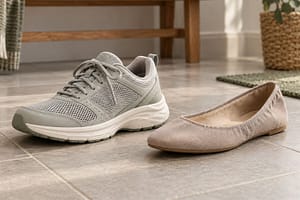
Features that may help include:
● A stable sole that does not twist too easily
● Enough cushioning for the surfaces you regularly stand on
● A secure heel
● Adequate width and room for your toes
● Arch support that feels comfortable rather than aggressive
● Enough space for an orthotic or insole, if you use one
Very thin, unsupportive or badly worn shoes may make symptoms worse for some people. Replace shoes when their soles, cushioning or supportive structure have noticeably broken down.
There is no single perfect shoe for everyone with flat feet. Our foot shapes, symptoms, jobs and comfort preferences are different. If an insole or orthotic causes new pain, pressure or numbness, stop using it and ask a qualified professional for advice.
Ways to Make Standing More Comfortable
Sitting down is not always an option, especially when you are working, cooking, waiting in a queue or using public transportation. These small adjustments may help make standing more manageable.
1. Change Position Regularly
Instead of forcing yourself to stay completely still, gently shift your weight between your feet. If there is enough room, take a few slow steps. Sometimes pacing is simply your body’s way of asking for a change in pressure.
2. Avoid Locking Your Knees
Try to keep your knees relaxed rather than pushed completely backward. Standing rigidly can contribute to fatigue through the legs and lower body.
3. Use Support When It Is Available
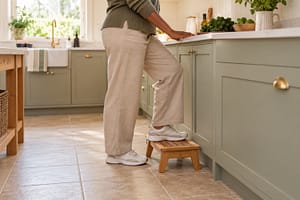
If you are standing at a counter, lightly resting a hand on it may help with balance. When appropriate, placing one foot on a low, stable footrest and alternating sides can also change how the load is distributed.
If balance is part of the difficulty, you may also find my article Flat Feet and Balance: Understanding the Connection helpful.
4. Choose Footwear for the Day Ahead
On days that will involve prolonged standing, prioritize shoes that feel stable, cushioned and comfortable. Avoid testing an unfamiliar pair when you already know you will spend hours on your feet.
5. Take Short Sitting Breaks
You do not have to wait until the pain becomes severe. When possible, take a brief sitting break before your feet feel completely exhausted.
6. Work on Strength and Flexibility
Exercises for the feet, ankles, calves, hips and core may help improve overall support and control. Gentle calf stretches may also help if tightness is contributing to your discomfort.
During my physiotherapy journey, I learned that exercise is not about forcing the body through pain. Form, consistency and choosing the right level matter. The exercises that suit you will depend on your symptoms and any other health conditions, so seek individual guidance when needed.
7. Consider a Cushioned Mat
If you regularly stand in one place, such as at a kitchen counter, an anti-fatigue mat may make a hard floor more tolerable. Make sure it lies flat and does not create a tripping hazard.
When Should You Get the Pain Checked?
Not every ache after a long day requires a clinic visit. But persistent, worsening or unusual pain deserves attention, especially when it begins interfering with daily life.
Consider speaking with a healthcare professional if:
● The pain is severe or becoming more frequent
● One foot has suddenly become flatter than the other
● Your feet feel weak, stiff or numb
● You have persistent swelling around the foot or ankle
● You are having difficulty walking or balancing
● The pain began after an injury
● Reasonable rest and appropriate footwear are not helping
A professional assessment can help determine whether the discomfort is related to the arch, plantar fascia, tendons, joints, nerves or another cause.
Start Noticing Your Own Patterns
One of the most useful things I did was simply notice the pattern. I began paying attention to when I paced, what surface I was standing on, which shoes I wore and where the discomfort started.
If you would like a simple way to track what may be affecting your feet, subscribe below and I will send you my free guide, 7 Things to Know If You Have Flat Feet + Daily Pattern Tracker.
Listening to What My Feet Are Telling Me
I no longer think of my need to pace as simply being restless.
When I shift my weight or walk around while waiting, I am responding to discomfort that other people cannot necessarily see. Standing still may look effortless, but for someone whose feet are already working hard to support the body, it may feel anything but effortless.
Having flat feet does not mean everyone will struggle with standing, and it does not make pain inevitable. But if standing still feels worse than moving around, you are not necessarily imagining the difference. Pay attention to the pattern: the surface, your shoes, how long you have been standing and exactly where the discomfort appears.
Sometimes the simplest response is also the most useful: shift your weight, take a few steps and give your feet the change they are asking for.
Do you also find yourself pacing while waiting because standing still makes your feet uncomfortable? I would love to hear whether you have noticed the same pattern. Share your experience in the comments below.
Medical disclaimer: This article is based on personal experience and general research. It is intended for informational purposes only and is not a substitute for diagnosis or treatment from a qualified healthcare professional.
Sources
● Flat Foot — SingHealth, Singapore
● Flatfoot (Pes Planus) — MyHealth Alberta, Canada
● Flat Feet (Fallen Arches) — Healthdirect Australia
● Flat Feet — NHS, United Kingdom
● Choosing Shoes to Reduce Foot Pain — Guy’s and St Thomas’ NHS Foundation Trust, United Kingdom