
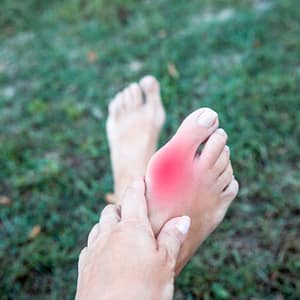
Living with bunions is not just about the bump on the side of the foot — it’s the pressure, the rubbing, the discomfort in certain shoes, and the way your foot mechanics change without you noticing.
And for me, having flat feet made everything more sensitive.
Nothing extreme. Nothing complicated. Just small daily adjustments that make a big difference over time.
Shoes That Make the Biggest Difference
The right shoes don’t cure bunions — but they do prevent them from getting worse, and they make walking much more comfortable.
Choose wide toe boxes
A wider front area gives your big toe space to move naturally instead of being pushed inward.
This alone reduces most of the rubbing and pressure on the bunion.
Look for real arch support
Because flat feet collapse inward, the big-toe joint absorbs more pressure.
Good arch support lifts your arch slightly and stops your ankle from rolling inward with every step.
Pick shoes with firm midsoles
Overly soft shoes make your foot sink and rotate inward more, which increases bunion stress.
A stable, supportive base is kinder to your joints.
Materials matter
Mesh, stretch fabric, and soft uppers feel much better over the bunion area than stiff leather or pointed designs.
Avoid narrow or pointy shoes entirely
Even a short period of time in them pushes the bunion inward and worsens the angle.
Daily Habits That Reduce Pressure
Little things you do every day affect how your bunion progresses.
Most people don’t realize this — I didn’t, either.
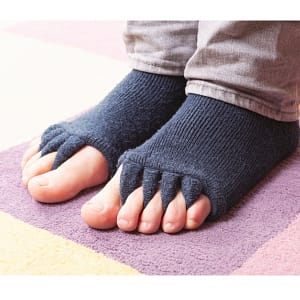
Use toe spacers at home
Even 10–15 minutes a day helps realign the big toe gently and reduces inward pressure.
Avoid sitting cross-legged
This position rotates the foot inward, pushing the big toe toward the second toe — the exact direction bunions progress.
I didn’t know this for years.
Wear indoor shoes on tile floors
Walking barefoot on tile adds constant pressure on the big-toe joint and collapses the arch more.
Supportive house slippers or sandals make a huge difference.
Trim toenails short and straight
Long nails push the big toe upward and inward inside the shoe — something I never thought about until it was explained to me.
Shorter nails allow the toe to sit more naturally.
Don’t stand with your weight on one side
This makes the inward angle worse on the loaded foot.
Distribute your weight evenly whenever you can.
Choose soft socks (and stretch them before wearing)
Tight socks squeeze the toes together.
Loosening them gives your bunion more space and reduces irritation.
Exercises That Help Bunion and Flat-Foot Mechanics
These are gentle and take only a few minutes, but they help the muscles around the big-toe joint and the arch.
1. Big Toe Stretch Outward
Gently pull your big toe away from the second toe.
Hold 10 seconds × 10 repetitions.
This counters the inward drift.
2. Towel Scrunches
Place a towel under your foot and use your toes to pull it toward you.
Strengthens the deeper foot muscles that support the arch.
3. Marble Pickups
Pick up small items with your toes.
Improves toe control and alignment.
4. Heel Raises
Go up on your toes slowly.
This teaches your foot to move upward without collapsing inward.
5. Short Foot Exercise
Lift your arch gently without curling your toes.
This helps stabilize the whole foot.
None of these should cause pain — just a mild stretch or gentle effort.
Tools That Help Over Time
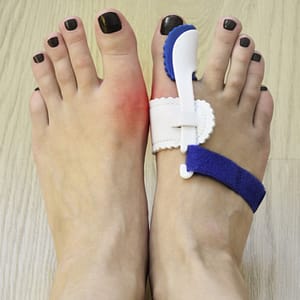
Toe spacers
Use them at home to reduce toe crowding.
Arch-support insoles
Helpful if your shoes are too flat or too soft.
Gel bunion guards
Reduce friction in shoes.
Warm or cold therapy
Cold for flare-ups, warm for stiffness.
When to See a Doctor
You don’t need surgery unless:
- the big toe starts crossing over the second toe
- daily pain limits your walking
- swelling doesn’t go down
- the bunion angle increases quickly
- you experience numbness under the big toe
Medication reduces inflammation, but the real relief comes from reducing pressure and improving alignment.
Small Changes Make a Big Difference
You don’t have to fix everything in a single day.
But choosing supportive shoes, avoiding positions that increase toe pressure, and strengthening your feet a little at a time can reduce pain and keep bunions from progressing faster.
In Part 3, I’ll share the types of shoes and insoles that are bunion-friendly and flat-feet friendly — because not every “bunion shoe” works well for flat arches.

I’m Fathima, the writer behind Flat Foot Journey/ I’ve lived with flat feet since childhood and share my experiences with foot pain, bunions and physiotherapy.
Through this blog, I write about what I’ve tried, what I’ve learned and how these challenges affect everyday life. I’m not a healthcare professional; my posts combine personal experience with information from reliable health sources.